Origins of Churpi
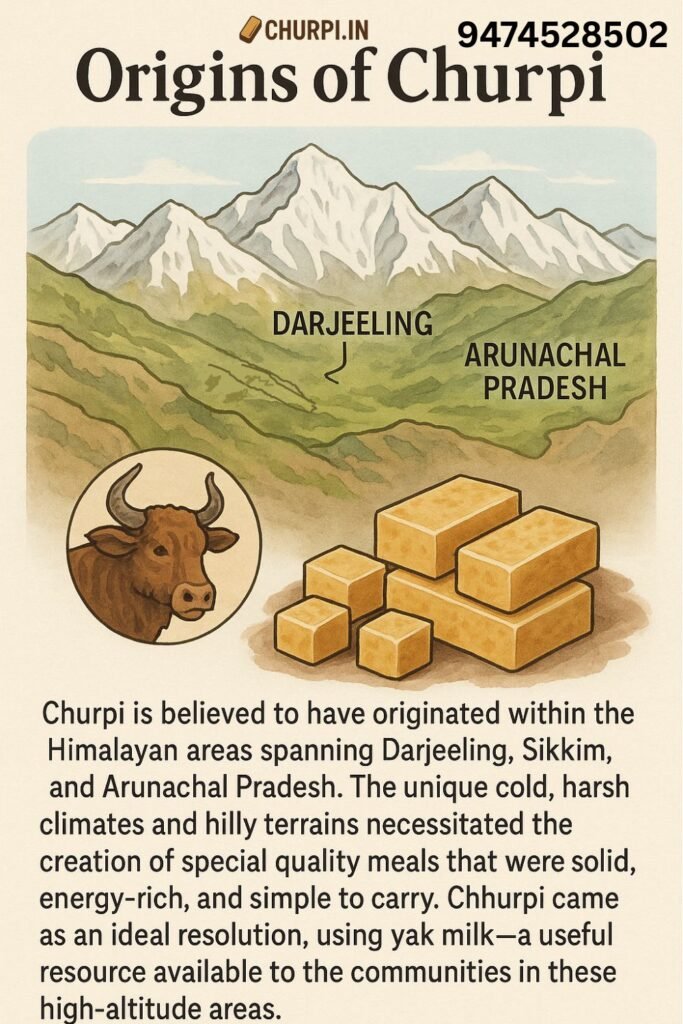
Chhurpi is believed to have originated within the Himalayan areas spanning Darjeeling, Sikkim, and Arunachal Pradesh. with unique cold harsh climates and hilly terrains, necessitated the creation of special quality meals that were solid, energy-rich, and simple to carry.
Chhurpi came as an ideal resolution, using yak milk or cow milk—a useful resource available to the communities in these high-altitude areas.
Preserving milk is the technique behind producing churrpi. Any traditional method does not allow refrigeration and luxurious storing. had been unavailable, and the manufacturing of cheese and different fermented merchandise grew to become important for survival.
By fermenting yak milk and drying the ensuing curd into onerous blocks, the individuals of the Himalayas developed a product that might face up to their difficult atmosphere and function as a dependable supply of vitamins.
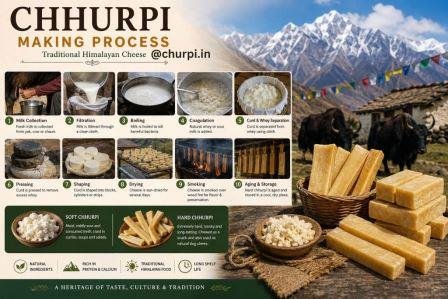
How Chhurpi Is Made
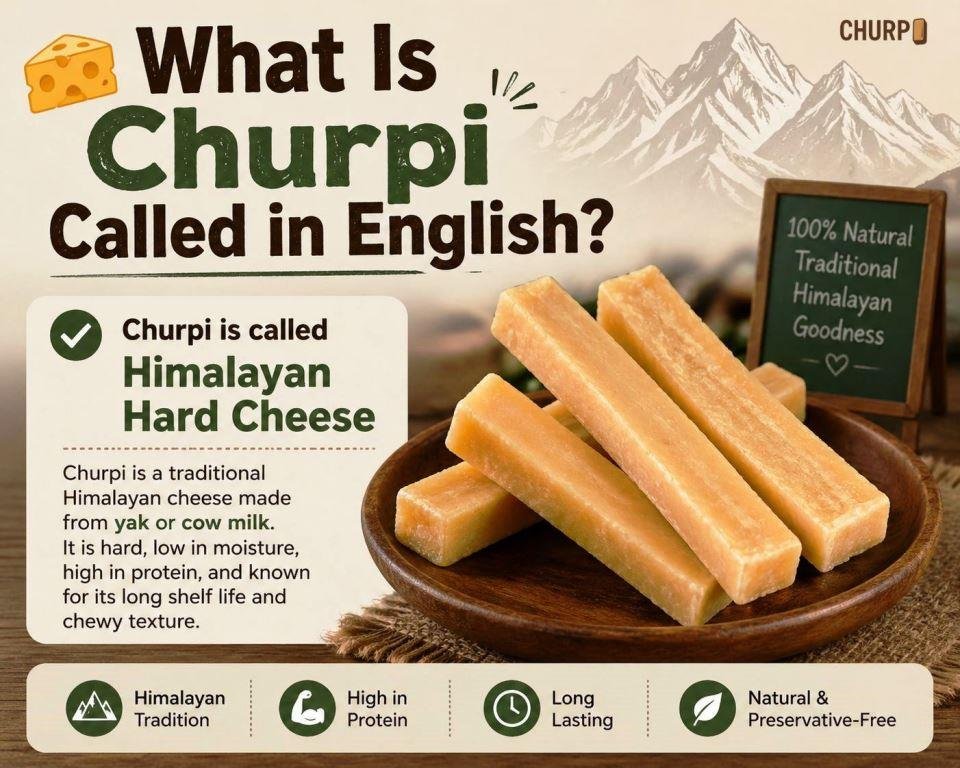
The method of creating chhurpi has remained largely unchanged for hundreds of years, handed down via generations as a talent of cultural and sensible significance. Chhurpi is historically constructed from the milk of yak or chauri (a crossbreed of yak and domestic cattle).
Curdling the Milk: organic milk is boiled and condensed. with lime as an agent is added to separate the curds from the whey.
Straining: A muslin cloth is used to strain away extra liquid. This creates a gentle, contemporary cheese generally known as gentle chhurpi, which is consumed contemporarily or utilized in cooking.
Drying and Hardening: To make onerous chhurpi, the contemporary cheese is pressed, dried, and aged for a number of weeks. The drying course usually takes place in chilly and windy environments, permitting the cheese to harden right into a dense, long-lasting type.
This artisanal technique of preparation ensures minimal waste and maximizes the dietary worth of the milk.
Cultural Significance
Chhurpi is greater than only a meal’s merchandise; it’s deeply woven into the cultural material of Himalayan communities. It serves as a staple for herders and vacationers, offering sustenance throughout lengthy treks in distant areas.
In areas like Darjeeling and Sikkim, chhurpi is a basic and necessary ingredient in conventional dishes. Gentle chhurpi is usually blended with soups; onerous chhurpi is chewed as a snack, providing a slow-release power supply that may last for hours.
Past its culinary uses, chhurpi has cultural and financial significance. It’s a worthwhile commerce commodity within the Himalayan barter economic system and a supply of earnings for native farmers and herders. The manufacturing of chhurpi additionally displays a sustainable lifestyle, using native sources and conventional information to satisfy the group’s wants.
Chhurpi’s Position in Himalayan Survival
The tough Himalayan local weather calls for resilience, and chhurpi has performed a vital position within the survival of its individuals. Its excessive protein content, lengthy shelf life, and portability make it a really perfect meal for those dwelling in distant areas with restricted entry to contemporary provisions.
Onerous chhurpi, particularly, is prized for its sturdiness. It might probably be final for years without spoiling, even in hostile circumstances, making it a dependable meal reserve for emergencies or lean seasons. Chewing on a bit of onerous chhurpi shouldn’t be solely a supply of vitamins but additionally a technique to keep heat and energy in freezing temperatures.
Chhurpi in Trendy Instances
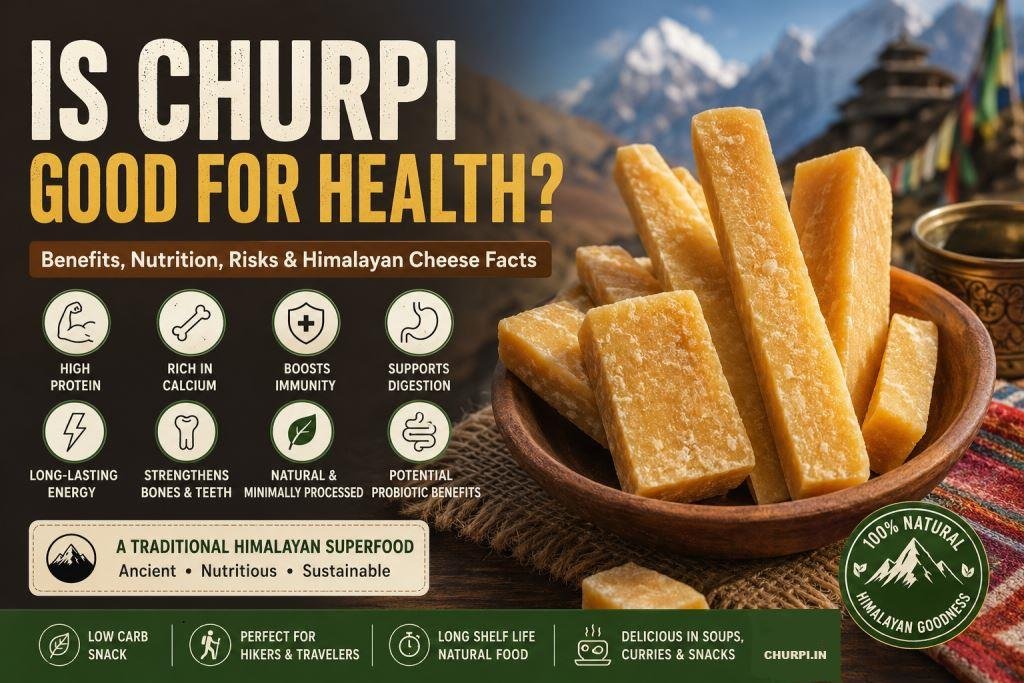
Lately, chhurpi has gained recognition past the Himalayas because of its distinctive qualities and rising curiosity in conventional, artisanal meals. The rise of health-conscious consuming has additionally contributed to its attraction, as chhurpi is wealthy in protein, calcium, and probiotics while being low in fats.
Chhurpi is now marketed as a gourmand product in city areas, with gentle chhurpi being utilized in artistic culinary experiments and onerous chhurpi being offered as a pure chew for canines. The latter has grown to be significantly fashionable in worldwide markets, where pet owners value its sturdiness and well-being advantages.
Chhurpi is a labor-intensive manufacturing process. This has led to considerations concerning the sustainability of its manufacturing as demand grows.
Preserving the Heritage of Chhurpi
As with many conventional meals, the way forward for chhurpi is dependent upon preserving the cultural information and practices related to its manufacturing. Initiatives to advertise sustainable yak farming, assist native artisans, and lift consciousness concerning the significance of conventional meals are essential for safeguarding chhurpi’s heritage.
Conclusion
The historical past of chhurpi is a testimony to the adaptability and resourcefulness of the Himalayan individuals. From its origins as a survival meal in harsh climates to its position as a cultural and financial cornerstone, chhurpi embodies the values of sustainability, group, and custom.
As we have fun with the distinctive qualities of chhurpi, it’s important to honor the heritage of the individuals who have kept this custom alive for hundreds of years. By supporting sustainable practices and appreciating the cultural significance of this humble cheese, we are able to make sure that chhurpi continues to thrive for generations to come.