

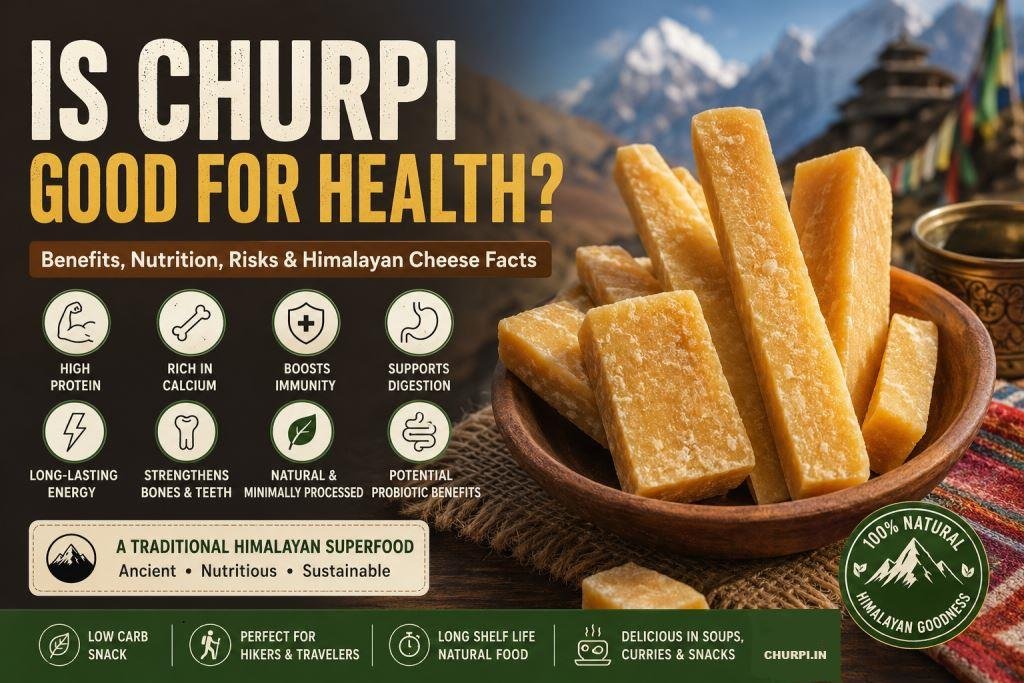
Discover whether churpi is good for health. Learn about churpi nutrition, protein, calcium, probiotic benefits, risks, and traditional Himalayan uses. #churpi #Chhurpi @churpi.in
Is Churpi Good for Health?
In the remote Himalayan mountains, where harsh climates and high altitudes shape daily survival, one traditional dairy food has sustained communities for centuries: churpi, also spelled chhurpi or chhurpey. Made from fermented milk and known for its remarkable hardness and long shelf life, churpi is one of the oldest traditional cheeses of the Himalayan region.
Today, churpi is gaining global attention not only as a traditional food from Nepal, Sikkim, Bhutan, Darjeeling, Tibet, and Arunachal Pradesh, but also as a high-protein snack, fermented functional food, and even a natural dog chew.
But an important question continues to emerge among health-conscious consumers:
Is churpi good for health?
The short answer is: yes, churpi can be highly nutritious and beneficial when consumed in moderation. It is rich in protein, calcium, minerals, and beneficial dairy nutrients. Traditional forms of churpi are also minimally processed and deeply connected to indigenous Himalayan food systems.
However, like all cheese products, churpi also has limitations. Its salt content, hardness, saturated fat levels, and digestibility vary depending on how it is prepared and consumed.
This comprehensive guide explores the nutritional science, health benefits, risks, cultural significance, and modern dietary relevance of churpi in extraordinary detail.
What Is Churpi?
Churpi is a traditional Himalayan cheese produced primarily in:
- Nepal
- Sikkim
- Darjeeling
- Bhutan
- Arunachal Pradesh
- Tibet
- Ladakh
It is traditionally prepared from:
- Yak milk
- Chauri milk (yak-cow hybrid)
- Cow milk
- Buffalo milk
Churpi exists in two major forms:
1. Soft Churpi
A softer, fresher version often eaten with rice, soups, curries, or fermented dishes.
2. Hard Churpi
A dried and hardened version that can last for months or even years. It is chewed slowly like a natural protein-rich snack.
Hard churpi is considered one of the hardest cheeses in the world.
Traditional Churpi Making Process
The preparation process reflects centuries of Himalayan pastoral knowledge.
Traditional Steps
- Fresh milk is boiled.
- The milk is curdled using:
- Natural acids
- Buttermilk
- Fermented whey
- Curds are separated from whey.
- The curds are pressed.
- For hard churpi:
- The cheese is cut into blocks
- Sun-dried or smoke-dried for days or weeks
- The final product becomes dense, chewy, and shelf-stable.
This preservation method was essential in Himalayan regions where refrigeration was historically unavailable.
Nutritional Profile of Churpi
One reason churpi is considered healthy is its dense nutritional composition.
Key Nutrients Found in Churpi
- High-quality protein
- Calcium
- Phosphorus
- Magnesium
- Potassium
- Healthy fats
- Essential amino acids
- Probiotic bacteria (in fermented forms)
Churpi Nutrition Facts
| Nutrient | Hard Churpi | Soft Churpi |
|---|---|---|
| Protein | Very High | Moderate to High |
| Calcium | Very High | High |
| Carbohydrates | Low | Low |
| Fat | Moderate | Moderate |
| Moisture | Very Low | High |
| Shelf Life | Months/Years | Few Days |
| Digestibility | Lower | Easier |
| Fermentation | Limited after drying | More active |
Why Churpi Can Be Good for Health
Churpi combines several nutritional characteristics that make it beneficial:
1. High Protein Content
Protein is essential for:
- Muscle repair
- Tissue growth
- Immune support
- Energy metabolism
Traditional Himalayan communities depended on churpi as a concentrated protein source during long winters and mountain travel.
Hard churpi especially contains highly concentrated milk proteins due to moisture loss during drying.
2. Excellent Source of Calcium
Calcium supports:
- Bone density
- Teeth strength
- Muscle contraction
- Nerve signaling
Because churpi is made from concentrated milk solids, its calcium density can be significant.
This made churpi especially valuable in mountainous regions where dietary diversity was limited.
3. Long-Lasting Energy Food
Churpi was historically consumed by:
- Herders
- Monks
- Traders
- High-altitude travelers
Its:
- Protein
- Fat
- Dense calories
- Long shelf life
made it an ideal survival food in cold Himalayan climates.
4. Potential Digestive Benefits
Fermented dairy foods may support gut health through beneficial bacteria.
Soft churpi, in particular, may contain:
- Lactic acid bacteria
- Fermentation-derived compounds
- Digestive-supporting microbes
Traditional Himalayan cultures often regarded fermented dairy as easier to digest than fresh milk.
5. Supports Weight Management
Churpi may help with satiety because:
- Protein reduces hunger
- Chewing time slows eating
- Low carbohydrate content reduces snacking spikes
Hard churpi especially takes a long time to chew, naturally limiting fast overeating.
6. Naturally Low in Carbohydrates
Churpi contains relatively low carbohydrate levels compared with processed snack foods.
This makes it attractive for:
- Low-carb diets
- Keto-style eating
- Protein-focused nutrition plans
Is Hard Churpi Healthy?
Hard churpi is nutritionally dense because most moisture has been removed.
Benefits of Hard Churpi
Concentrated Protein
Drying increases protein concentration.
Long Shelf Life
Can survive harsh climates without refrigeration.
Portable Nutrition
Ideal for trekking and mountain travel.
Slow Eating
Its hardness encourages slower chewing and mindful eating.
Potential Concerns
Extremely Hard Texture
Hard churpi can stress:
- Teeth
- Dental fillings
- Jaw muscles
Digestive Difficulty
Large chunks may be harder to digest.
Sodium Levels
Some varieties may contain significant salt.
Is Soft Churpi Healthy?
Soft churpi is generally:
- Easier to digest
- Softer in texture
- More suitable for elderly individuals
It is commonly used in:
- Soups
- Curries
- Pickled dishes
- Fermented meals
Because it retains more moisture and active fermentation characteristics, soft churpi may provide additional probiotic benefits.
Scientific Research on Churpi
Research into Himalayan dairy foods has increased in recent years.
Studies have examined:
- Microbial composition
- Fermentation characteristics
- Nutritional density
- Traditional dairy preservation
Researchers have identified beneficial lactic acid bacteria in some traditional churpi samples.
Scientific interest is growing because churpi represents:
- Indigenous fermentation knowledge
- Sustainable mountain nutrition
- Functional traditional food systems
Is Churpi Good for Weight Loss?
Churpi may support weight management when consumed appropriately.
Why It May Help
High Satiety
Protein helps reduce hunger.
Slow Consumption
Hard churpi takes time to chew.
Low Sugar
Contains little added sugar.
Reduced Snacking
Can replace highly processed snacks.
However
Cheese remains calorie-dense.
Overconsumption may increase:
- Calorie intake
- Saturated fat intake
- Sodium intake
Moderation remains important.
Is Churpi Good for Diabetics?
Churpi may be better than many processed snacks because it is:
- Low in carbohydrates
- Rich in protein
- Slowly consumed
However, diabetic individuals should still monitor:
- Portion sizes
- Sodium content
- Fat intake
People with medical conditions should consult healthcare professionals before making major dietary changes.
Is Churpi Good for Children?
Churpi can provide:
- Protein for growth
- Calcium for bones
- Energy for active lifestyles
However:
Important Warning
Hard churpi may present:
- Choking hazards
- Dental risks for young children
Soft churpi is generally safer for children.
Is Churpi Good for Elderly People?
Soft churpi may benefit older adults because of:
- Protein support
- Bone-strengthening calcium
- Easier digestibility
Hard churpi may not be ideal for elderly individuals with:
- Weak teeth
- Dentures
- Jaw problems
Is Churpi Good for Athletes and Hikers?
Many trekkers and mountain travelers value churpi because it is:
- Portable
- Protein-rich
- Naturally preserved
- Energy dense
Compared with processed sports snacks, traditional churpi contains fewer industrial additives.
Potential Risks and Side Effects
Although nutritious, churpi is not perfect.
Possible Concerns
High Sodium
Some preparations contain substantial salt.
Saturated Fat
Like most cheeses, churpi contains dairy fat.
Lactose Sensitivity
Some individuals may still experience digestive discomfort.
Dental Problems
Very hard churpi can damage teeth.
Hygiene Concerns
Improperly prepared products may carry contamination risks.
Authentic, hygienically prepared churpi is important.
Can You Eat Churpi Daily?
Yes, many people can eat churpi regularly in moderate amounts.
Suggested Moderation
Small portions are generally best.
People who should limit intake may include:
- Individuals with hypertension
- Kidney disease patients
- People sensitive to sodium
- Those with severe lactose intolerance
Churpi in Traditional Himalayan Culture
Churpi is more than food.
It is deeply connected to:
- Himalayan pastoralism
- Yak herding
- Seasonal migration
- Mountain trade routes
- Buddhist monastic diets
Historically, churpi functioned as:
- Survival food
- Winter protein reserve
- Trade commodity
- Cultural identity food
Churpi in Modern Health Food Trends
Today churpi is attracting global interest because consumers increasingly seek:
- Traditional foods
- Fermented products
- Natural protein snacks
- Sustainable artisanal foods
Hard churpi is also internationally marketed as:
- Natural dog chew
- High-protein pet product
Churpi vs Other Cheeses
| Cheese | Protein | Shelf Life | Fermented | Hardness |
|---|---|---|---|---|
| Churpi | Very High | Very Long | Yes | Extremely Hard |
| Paneer | Moderate | Short | No | Soft |
| Cottage Cheese | Moderate | Short | Mild | Soft |
| Cheddar | High | Long | Yes | Firm |
| Parmesan | High | Long | Yes | Hard |
Myth vs Fact
| Myth | Fact |
|---|---|
| Churpi is unhealthy because it is cheese | Moderate amounts can be nutritious |
| Hard churpi lasts forever because of chemicals | Traditional drying preserves it naturally |
| Churpi has no protein | It is actually protein-rich |
| All churpi is probiotic | Fermentation benefits vary by preparation |
Did You Know?
- Hard churpi is considered among the hardest traditional cheeses in the world.
- Himalayan yak milk is naturally rich in fat and nutrients.
- Churpi helped sustain mountain communities before refrigeration existed.
- Some Himalayan traders historically carried churpi during long cross-border journeys.
Frequently Asked Questions
Is churpi healthier than paneer?
Churpi is usually more concentrated in protein and minerals due to drying, though paneer may be easier to digest.
Is hard churpi safe for teeth?
Excessively hard pieces may damage teeth or dental work.
Is churpi probiotic?
Some fermented forms may contain beneficial bacteria.
Can lactose-intolerant people eat churpi?
Some individuals tolerate fermented dairy better, but reactions vary.
Is churpi keto-friendly?
Yes, its low carbohydrate content may suit keto-style diets.
Why is churpi so hard?
Drying removes moisture, creating a dense long-lasting cheese.
Can dogs eat churpi?
Special pet-grade churpi chews are widely sold internationally.
Expert Insight
Nutrition experts increasingly recognize traditional fermented foods as valuable components of dietary diversity.
Churpi represents an important example of:
- Indigenous food preservation
- Sustainable dairy use
- Mountain nutrition science
- Fermented protein-rich food traditions
Conclusion
So, is churpi good for health?
For many people, the answer is yes.
Churpi provides:
- High-quality protein
- Calcium and minerals
- Long-lasting satiety
- Traditional fermentation benefits
- Minimally processed nutrition
Its historical role in sustaining Himalayan communities reflects its remarkable practicality and nutritional value.
However, moderation remains essential. Because churpi can contain significant sodium and saturated fat, excessive consumption may not suit everyone. Extremely hard varieties should also be consumed carefully to avoid dental problems.
Ultimately, authentic churpi stands as more than just a traditional cheese. It is a living symbol of Himalayan resilience, indigenous food knowledge, and sustainable mountain nutrition that continues to attract global interest in the modern health food era.